My welcome into Riverdale Farm comes with a new-ish, yet old-timey looking gate, however I bypass it to round around to the Winchester Street entrance.
The farm’s main building, the Victorian-style Simpson House, is home to the Cabbagetown Regent Park Museum, which is open for business today. It’s unique in that it’s the only museum in Toronto devoted to telling the story of a specific city neighbourhood. I have a soft spot for the museum for the time I volunteered there.
My time at the museum has taught me of the Riverdale Farm area’s long past: From the pristine valley the Aboriginals encountered (the Algonquian word for the Don itself was Wonscotonach, meaning ‘burnt back grounds’), to the land granted to John Scadding by Mr. John Graves Simcoe which was eventually purchased by the City for parkland, to the zoo Daniel Lamb (whose family is buried in the neighbouring Toronto Necropolis) established here in 1888, and finally, to the heritage farm we now know and have enjoyed since 1978. Walking through the farm, I get a sense of each layer.
My first stop is the Pig Barn to take in, among others, some turkeys and bunnies that would have existed in a farm around the turn of the 20th century.
From there, it’s off to see some goats and sheep, although the latter are sadly M.I.A.
Following the path all the way down, I come to the Residence. This is the first of a handful of remaining buildings that are original to the zoo. This one was, in fact, the keeper’s home. It was also a morgue and an animal hospital as well during its tenure.
My favourite feature and tidbit of the Residence is the use of clinker bricks in its construction, which incidentally was conducted by Don Jail inmates as a work project. I’ve heard stories of prisoners interacting with children, and how it was the happiest time for the inmates during their sentences because of it.
Backtracking, I do some wayfinding and try to determine whether north is actually north (it isn’t), before finding myself at the cows.
Above the cow paddock is the Donnybrook Ruin, a towering structure whose original purpose, as far as I know, is a mystery. I was delighted to spot some clinkers in its walls too.
I forge on down the Lower Road and come to the Riverdale Farm Ponds. These algae covered water bodies are important bird and wildlife sanctuaries, and serve as vibrant ecosystems. They also help in renaturalizing the Don River Valley and bring it back to a time before the river was channelized and rerouted.
Before meandering across a bridge, I note a barrier to the side which warns of the crossing’s occasionally flooding. Yuh oh. Although I can’t be sure, the bridge itself looks like a left-over from the zoo days.
The monkey cage is most definitely a relic, however. Much is made of the ethics of keeping animals in cages for viewing pleasure; even more is made of the state of early zoos and the sizes of the holding cells. The Riverdale Zoo closed and moved to Scarborough in part because its very inadequate facilities. (Also, a zoo next to a growing metropolis isn’t the best of ideas.)
Mustering the uphill climb back, I take a peek down the Middle Road, which doesn’t really lead to anything, but allots for a good view of the Meeting House.
My exit from the farm includes some horse-inspired art outside of the Simpson House. I quizzically study it for a second, eventually giving my due to the effort that must’ve went into its construction. Then, I’m off on my way, this time passing under the new-old sign I shunned before.
This isn’t the end of my Riverdale Farm themed encounters, however. This charming little Bell Box Mural located Parliament on Winchester boasts a great tribute to our barnyard friends.
Warden Woods is undoubtedly a gem. It’s a gem as a piece of natural heritage in Toronto, and it’s a gem along Taylor-Massey Creek. I’m here as a part of a Heritage Toronto tour, led by Andrew McCammon of the Taylor-Massey Project, a volunteer effort dedicated to preserving the Taylor-Massey watershed.
We gather at the corner of the Warden and St. Clair Avenues opposite Warden Subway Station and descend into the park.
A bit of background on the Taylor-Massey: it feeds into the River Don, flowing from the Forks and concluding at Terraview Park near Victoria Park & the 401 in Scarborough. Its real headwaters, though, are actually buried under the highway and just north of it. Also, like its name suggests, it consists of two branches named for prominent Toronto families.
The first thing that strikes me about the creek is how naturalized it looks. There’s actual flow to it! Whereas other creeks in the city (including parts of the Taylor-Massey) have been channelized and filled with concrete beds, there’s nothing of the sort with this ‘reach’ of the ravine.
We get our first look at the creek and see also a far off cliff – a mini-Scarborough Bluff, as I like to think of it. Both are glacial remnants of the last ice age.
As Andrew explains, the TMP is trying to make the watershed into a functioning, vibrant ecosystem. That has meant no washrooms in the park (although I don’t see why any would be needed) and no night lights. Curiously, there’s only one bench in the whole park, too. Warden Woods is home to many bird sanctuaries and serves as a stop over for migratory species.
But it doesn’t mean the creek isn’t without its challenges. That same great view shows that its banks have been fortified with armor-stone bricks to prevent erosion. Other parts lack the armor-stone, though.
The trail itself begins as a gravel path. Unlike other parks of its size and larger, it doesn’t branch off. To the right is the creek, to the left is thick forest. It is a serene stroll – if you don’t mind the rattle of nearby subway cars.
Warden Woods Park also faces issues of storm water and sewage water draining into the creek. Andrew brings us to a bridge over a tiny tributary and has us note the smell. Pungent stuff it is.
The problem with coordinating a plan of ‘attack’ to tackle these issues is that there are a couple of bodies – Toronto Parks, Toronto & Region Conservation Authority, as examples – that have some jurisdiction over Warden Woods and similar areas. Sadly, they don’t talk to each other as much as they should. With the City’s Ravine Strategy, perhaps a concentrated effort will be in place.
The other issue within Warden Woods – and in most natural settings in Toronto – is invasive species. Particular to both is the prevalence of garlic mustard, which impedes the ability for any other plant to grow in its vicinity.
We come to a large bridge, which Andrew says at one time had a plaque dedicated to the Thompson Brothers. Across it is a path that once led to a mini BMX course and today is a great spot for bird watching. Serendipitously, at that very moment a hawk (red tailed, maybe?) flies high above us.
Further past the bridge, the now paved path curves and meanders at about the spot where the shores of ancient Lake Iroquois once stood.
At the end of the trail, Warden Woods Trail curiously becomes a parking lot, which is unfortunate because if one where passing through on Pharmacy, he/she would have no clue that a great natural escape exists down the way.
100 in 1 Day is an initiative of citywide ‘interventions’, aimed at making the city a better place. There were many to choose from (far greater than 100 actually), but I chose to go the ‘Learnt Wisdom: Above and Beyond’ lecture.
There were a few reasons for attending this particular intervention. First, it would be held at the old Eastern Avenue bridge, which I’ve read about and seen pictures about, but I’ve never actually been to. Second, one of the hosts – Daniel “The Urban Geographer” Rostzain (I feel like I gave him a wrestling name) – is doing really great things with his library-philia, Jane’s Walking, and everything else. And third, it’s about storytelling – and who doesn’t love a good story?
The meetup point is at King and River Streets. While waiting, I chat with Daniel, who I have bounced tweets back and forth but never met in the flesh. I also meet Kyle Baptista of Park People. On top of that, I encounter fellow tweeter Sean Marshall at the bridge. It’s a wonderful meeting of the online community!
Also while waiting, I do a panorama of the interesting sites in the vicinity. To the south is the sleek black River City complex of condos, which, in the last time I wrote about Corktown, was not completed. To the east is the always intriguing convergence of King and Queen Streets. There’s a triangular island and undeveloped plot of land, which Kyle believes is supposed to be a park eventually. Makes sense. To the immediate north is the old Scotiabank and beyond that up River is the 1907 Queen City Vinegar Co. Lofts.
The walk to the Eastern Avenue Bridge travels down Lower River Street, which was absent from Toronto’s street grid up until a few years ago. We pass Underpass Park (great use of dead space), Lawren Harris Square (not to be confused with Lawren Harris Park), and come to the Corktown Common. Only, we don’t actually come to the Corktown Common because it’s been fenced off for the summer for the PanAm games. A shame because it’s a great recreational space which doubles as a natural flood plain.
It’s amazing to think of the reconfiguration the West Don Lands has gone through in the last little while and over the last hundred years. River and Bayview Streets have southern extensions. The railway lands that dominated the area are gone. All the industry that once prevailed on or near the banks of the Don are gone. It’s remarkable to think, in that regard, that the Corktown Common was once occupied by the William Davies Co. pig processing operation.
Corktown & West Don Lands. Source: Goads Atlas, 1924
We travel around the security zone and come the Lower Don Trail. My eye catches a couple of Heritage Toronto plaques highlighting the stories of the waterway. But more than that, the graffiti is disappointing to see. I don’t see a reason to mark up a plaque.
Far into the distance is the Unilever Plant, which is the subject of a lot of city building discussions including the Gardiner East debacledebate. Every week for the final year of the soap plant I saw the striking workers camped outside the factory. Then, they weren’t there and the plant succumbed.
A stroll up the trail (very well used on this sunny Saturday) and we’re at our destination. The Eastern Avenue Bridge is pretty much a bridge in only name because it doesn’t connect anything. It’s truly a bridge to nowhere. On one side is the trail with the meager security and on the other the Don Valley Parkway.
In a pre-DVP world, Eastern Avenue ran a straight course east and west of the Don. But with the construction of the highway in 1961, Eastern was rerouted to curve up from about Broadview Avenue to about Cherry Street before following its original course again.
The Eastern Avenue bridge, the third version of its kind at this crossing, is a big hunk of metal with cool zig-zaggy beams and locales where explorers have left their mark. It’s a dead space, but for our purposes makes a great performance venue – surprisingly so with the highway running beside us. As Natalie – the other creator/host of Learnt Wisdom – told me, their past venues have included underneath the Leaside Bridge, a pool, the Toronto Islands. Their next one is at a cemetery tucked in at a highway interchange.
The lecture starts and, one by one, four speakers come up and tell us their tales of going ‘above and beyond’. I won’t recount the stories themselves, but the messages behind them were great: how being lazy and doing nothing can actually be a good thing; and how small people can do big things & if you have an idea, for it.
If the goal of 100 in 1 Day was to inspire change that would make Toronto a better place, I think the Learnt Wisdom intervention achieved it with the messages of the story tellers.
On that note: If you, reader, have a story to tell on the theme of ‘Milestones’ or have an idea for am unusual venue, get in touch with them.
Following that, Kyle and I retrace our steps back to King Street, and get a good look at the city skyline from the development lands.
My streetcar isn’t going to arrive for another 10 minutes lamentably, so I get a coffee and walk down the street to pass the time. At St. Lawrence Street, a building catches my attention. At first I think it’s a church because of the northern part that juts out, but on further inspection, I better suspect that it’s a factory. Further research has produced that this was originally the Simpson Knitting Mill in the 1920s. Today, it’s work-live lofts.
A peer down Sumach and its almost completed Cherry ROW streetcar line to the Distillery District follows.
Finally, I check in with the great art pieces under the Richmond and Adelaide Street overpasses. The nautical exploration themed design catches my attention most. It’s about this time that, not a boat but, a rocket picks me to conclude this adventure.
It’s not often I go on my psychogeographic walks in the company of others. Alas, this is my situation – the second time in as many weekends – that I find myself in.
As a resolution to myself, I’ve decided to expand my social network – put myself ‘out there’, so to speak. And so here I find myself: Standing in front of Sherbourne Subway Station along with 30+ strangers to go to a Meetup walk through South Rosedale and its connecting trails.
A quick stroll up the street and we find ourselves – at the direction of the Meetup organizer – winding around Rosedale’s streets, which themselves do some winding. Yes, the layout of this upscale neighbourhood bites its thumb to Toronto’s grid(ish) setup. It was designed as an enclave after all and still has that character. It’s easy to feel like an outsider – a tourist, of sorts – while marveling at its (Edwardian, Victorian and otherwise) houses.
Our path roughly follows Park Drive, Maple Avenue, Glen Road, Dale Avenue, and Castle Frank Road. The naming of (at least some of) Rosedale’s streets follows a very nature-filled theme: Maple and Elm are, of course, types of trees; and, Dale and Glen both mean ‘valley’. Yes, this is an enclave defined by its flora and its geographic contours as much as it is its built heritage.
Passing through Cragleigh Gardens, the former estate turned public park, we round a corner and begin our descent via Milkman’s Lane. A certain coolness greets us at the bottom…along with a happy go lucky doggy who’s decided that playing in a mud puddle is a fun exercise. His owners aren’t part of our group, and I don’t suppose they figure it fun for them!
Further up the way, I note some pillars off to the side. They look like gates. Gates to what? I don’t know. If any trail/local history enthusiasts want to lend their knowledge, I’d be curious to know!
Park Drive Reservation Trail hugs Yellow Creek. It’s definitely how you would picture a creek: Shallow, not so potent. It enters a sewer in at least one spot. Someone near to me asks if it’s a water treatment plant. I say I think it’s too small for that. We’ve got huge one in the east end for that. Then we get into a discussion of the RC Harris Plant. She thinks it was a prison. I say water infrastructure can look that awesome.
The trail ends at Mount Pleasant Road. There’s a moment where we contemplate jaywalking. Alas, we do, after the rush of cars ends. It’s an intersection perhaps in need of traffic lights, I’d think.
Our Meetup continues on the Belt Line Trail. This one is a bit more uneven in its terrain. I look up and see houses overlooking the valley. That’s quite a backyard to have.
At one point a fellow walker asks me where we are. I answer in earnest that I do not know. I know our destination, but deep in the valley my bearings are a bit off. There’s an incline – the biggest of the whole trail.
At the end of it, we’re back to civilization. Taking a look around, I know where we are. Avoca Avenue! I recognize the railings beside us and the story behind them from a Heritage Toronto walk of Deer Park. They were originally on the Avoca Bridge – the predecessor to the St. Clair viaduct.
From there, we head south to David Balfour Rosehill Reservoir Park, making a circle around it. The reservoir was covered in the 40s, but a H20 molecule marks the park’s history.
On St.Clair now, it’s to the subway (or post-Meetup libations for some) we go. Before that though, there’s the Arthur Meighen Federal Building to note. It’s a 1957 construction, but there’s some definite Art Deco influence in its ornamentation.
The journey begins on Dupont street at the northern terminus of St. George Street. Across the way is the very yellow Pour House pub, which much like the rest of the structures on the street is a converted 18th century home. These businesses are all huddle together to make the Dupont By the Castle BIA. Fact: Toronto is the originator of the BIA.
This still, in many ways, is an industrial area. Manhole covers hiding the buried Toronto Hydro lines tell me that.
But it’s also a industrial area looking to be something else. The railway overpass on Davenport is a perfect example of that. It’s ugly and it’s grimy. But like our alleys, someone (or many someones) has taken this dead space and injected from life and creativity.
On the other side of the tracks (hmm, that sounds more menacing than I intended it be), Davenport meets Macpherson and Poplar Plains to make an odd intersection. It’s not very pedestrian friendly for someone trying to go from west to east, as I am now. Given that, OK, maybe the other side is a bit menacing.
Finally mustering it, I come to the massive Macpherson Avenue Substation. Completed in 1911, it was designed by city architect Robert McCallum who also did Yorkville Public Library and many early 20th century firehalls, among many other city owned buildings.
Across the way is warehouse looking thing. I don’t know what is or was, but I like it. Keystones!
Next, I follow Rathnelly up, a charming street which shares (or lends?) its name to the area’s moniker – The Republic of Rathnelly. How and when did a micro-neighbourhood become a state, you ask? I had to ask as well. The answer is it’s one big inside joke dating back to the 1960s when the areas residents ‘broke away’ from Canada.
Around the bend is High Level/Poplar Plains Pumping Station, another McCallum project from 1906 (with subsequent additions). Our Rathnellians (?) ‘occupied’ it while in ‘negotiations’ with the Canadian government.
It’s interestingly the second water plant on the site, replacing the old Yorkville Water Works. I make my way around and marvel the outside. There will never be another infrastructure building in this style again. And really, that’s for good reason, isn’t it? Things have to evolve and be of their period.
Leaving the water plant, I pass through the floating island park that is Boulton Parkette and continue up Davenport. I come across another power building, this time Bridgman Transformer Station, 1904. Now operated by Toronto Hydro & Hydro One, it was originally designed for the Electrical Development Company, of which Sir Henry Pellatt of Casa Loma fame (more in a moment on that) was the president. In April 2015, it looks like there’s more work to be done.
Moving past the transformer station (and another weird three-way intersection), I continue along Davenport. At Madison, an orange building catches my attention. It stumps me. Waldorf? What’s that? Well, turns out it’s the Waldorf Academy, a private school which uses an alternative educational approach – one that’s holistic and multidimensional. Hmm, the more you know?
Davenport hugs the escarpment left behind by the ancient Lake Iroquois. The way up the hill is the Baldwin Steps, which are located up the street from the Toronto Archives. It’s been a long while since I’ve navigated them. In fact, I have very vague childhood memories of making the climb. There are joggers working them as I ascend. I envy them. They attack it so effortless. Meanwhile I have to catch my breath and relieve the burning in my thighs.
The top of the hill and the entire area at large is marked by two neighbouring museums. The first is Spadina Museum House and Gardens. It’s the 1866 manor of the Austin family, now a City of Toronto Historic Site restored back to the 1920s. It’s after closing time, so I can only admire from behind the gates. Next time.
Next, I walk around to Pellatt’s Casa Loma, also a Lennox design (perhaps his most famous?), completed in 1914. The House on the Hill is a mishmash of styles and thus drives some architecture junkies nuts. Me, I’m mostly indifferent. As I scan it now, it’s definitely imposing, but doesn’t wow or horrify me. The one constant in its history has been it’s uncertain future – the idea of a civic museum inside its walls is one of them.
Peering into the fountain, I don’t see any pennies. De-circulation will do that I guess. I also have to smile at the warning sign behind it. The only reason to make a rule is if there have been past examples.
Facing the museum is Pellatt Lodge, 1905, the residence of the Pellatts while the castle was under construction.
Up the street, I can see another tower rise above the land, and I admittedly have a “Another castle?!” moment. Then I realize these must be the stables – which my childhood does not recall at all but my brain knows a bit about. There’s some reno-ing happening here too. The best tidbit about the stables: SONAR was being developed in its tunnels during World War II.
Next, I backtrack on to Austin Terrace and give the street a little promenade. It’s narrow, it’s quiet, it’s treelined – all the checkmarks of a residential street checked off. My stopping point before circling back to the castle is a neat cottage-y house at Austin Court.
From there, it’s down the hill on Walmer again where there are mansions overlooking the way. Hello Davenport, old friend. And hello, George Brown College. The school’s Casa Loma campus was founded here in the 70s and it definitely looks it. Or at least, the newer buildings do. Its older ones are repurposed industrial structures. I get a kick that there’s a Tim Horton’s neighbouring by. Students do need their caffeine after all!
Continuing on, I hit Tollkeeper’s Park. It houses the Tollkeeper’s Cottage, a lesser known museum which throws back to the days of toll roads and the stations that operated them. This one at Davenport and Bathurst was in service as early as 1850 and the building itself dates to the 1830s. It’s definitely a great opportunity to tell the story of early York and winding Davenport Road. As I sniff around the site there’s a couple also checking it out. They go right up to it, but I don’t think they get very far because it seems to only be open on Saturdays.
Moving south, the TTC’s Hillcrest facilty hugs the west side of Bathurst and has been on the site since the 1920s. The Inglis building on its southern end catches my attention specifically. Those long arched windows.
Finally, the day ends as it began at the tracks. Animated faces greet me at the Bathurst underpass. On the other side, I elect to give my feet a break and catch a streetcar.
Before I can start my stroll, I note the taste for coffee developing in my buds. I opt not for Starbucks and not for Timmies, which hang beside each other in competition, but for the Toronto Reference Library. Yes, it may be closed on this Easter Monday, but Balzac’s isn’t. The customer in front of me in line tries to pronounce the name of the brew she’s ordering; the barista has to correct her. Me, I don’t bother with the given name of my amber roast; I grab it and am on my way. Now I can start.
Yorkville is about as quintessential a Toronto neighbourhood as you can get. It also has a deeply layered past and an ever evolving future, some of which I am already aware of and eager to see the evidence of. While its borders have expanded and contracted over its long history, it’s my thought that the part east of Yonge doesn’t get a lot of consideration.
And so, that’s what I intend to do to start things off.
I don’t get very far on Asquith before I see my first discovery. Although I’m hugging (not literally) the Bell building on the opposite side of the street, my eyes spot a pathway beyond the library across the way. The street sign reads ‘Sherlock Holmes Walk’. Literary giants next to one another! Having read Mr. Conan Doyle’s biography years ago, I imagine he would approve of the tribute – he loved Toronto and Canada (and hated the States).
At the end of the way is Church Street, whose curvy route between Bloor and Yonge Streets is the result of a project to relieve traffic congestion in the 1920s. Even without this knowledge, the odd meeting of Church, Collier, and Park streets and the island it forms in the middle just looks unnatural. I look towards Davenport, spotting the famed Masonic Temple, 1917, but opt to head in the opposite direction.
Yorkville, east of Yonge Street. Source: Goads Atlas, 1884.
My next stop, situated beside a singular Victorian house (no doubt once part of a row), is Asquith Green, which sadly is more muggy brown than green. Still though, I remind myself of the parkette’s potential in the summer and give it points for the animal cutouts and accenting structure in the middle. I don’t know the source of what I think is a quote, but subsequent Googling has produced ‘We Rise Again’, an Eastern Canadian music classic. Here’s a moving version with the great Maritme songstresses, Anne Murray and the late Rita MacNeil.
Following Park Road up, I come to Rosedale Valley Road. This quiet throughway marks the border between Yorkville and its upscale residential sister, Rosedale.
It is also built on top of the now completely buried Castle Frank Brook. It is particularly important in shaping the modern geography of Yorkville, but also to its history – particularly in its brewing and brick making past. Located southwest of me near Sherbourne Street, for example, was Joseph Bloore’s brewery. Bloor Street, of course, is his namesake. (Mr. Bloore also holds the distinction of having the freakiest portrait of any figure in Toronto’s history.) Parkland marks the intersection, and trudge through it to arrive at Severn Street.
Joseph Bloor Brewery, 1865. Source: Toronto Public Library.
The tiny dead end street is anything but inconsequential. For one, it’s named after John Severn, another 19th century brewer. His establishment stood at Yonge and Church. Moreover, Castle Frank Brook’s alternate name is Severn/Brewery Creek.
Severn’s Brewery, 1870s. Source: Toronto Public Library.Severn’s Brewery, 1912. Source: Toronto Public Library.
Perhaps even more notable to the street is that one can find the Studio Building. On the way here, I passed through Lawren Harris Park; Mr. Harris lived and worked in the Studio Building, 1914, along with other members of the Group of Seven.
The Studio Building holds double distinction as a National Historic Site and a Toronto heritage property. The Toronto Historical Board plaque in particular informs me that the Harris in Lawren Harris is of the Massey-Harris industrial empire. Learn something everyday. The Studio Building was designed to be a secluded quiet spot where artists can work their creative process. As I move around the building I hear the periodic screeching of the Yonge subway and somehow I think that doesn’t completely hold true today (although the surrounding parkland does help a bit).
I continue on my way, this time following Aylmer up. I stop for a moment to watch the trains roll in and out of Rosedale Station and then cross Yonge. The street becomes Belmont and I’m liking the streetscape on either side of me. Other than admiring the charm, however, I do have another purpose for being here.
Belmont House is a retirement home and long term care centre built in the 60s. More interesting to its story is that it is built on the site of an Aged Men’s Home, Aged Women’s Home, and Magdalen Asylum & Industrial House of Refuge.
The latter establishment is most fascinating. On first glance at the name, it doesn’t sound like a particularly good place – asylums generally don’t provoke the best connotations and the Biblical character it’s named for isn’t always portrayed in the best light either. The ever trustworthy Wikipedia tells that Magdalen Asylums are not just a Toronto thing. Its history, however, promotes it as a place of care for homeless women and I suppose I will take it as such.
This detour completed, I circle back to Yonge Street and walk north. I turn onto Ramsden Park, the former site of 19th century brickyards. Castle Frank Brook ran through here too, the riverbed making for rich clay deposits. The park’s uneven, dug-in landscape is the only remnant of its industrial past. (And here I’ll shamelessly plug my Industrial Heritage Map). There’s also a few stubborn remnants of winter in a file snow piles that refuse to acknowledge the existence of spring.
Yorkville Brickyards. Source: Goad’s Atlas, 1884.Yorkville Brickyards, 1880s. Source: Toronto Public Library.
Pears Street, which runs adjacent, is named for one of the brick makers. A cat lounges on the sidewalk and soaks up the sun. He has the right idea. I eventually hit Avenue Road. Across the way is 174 Avenue, otherwise known as the Village Corner in the 1960s Yorkville folk scene. The Village Corner gave the first break to Ian & Silvia and a young Gordon Lightfoot in 1962. For more on Gordon Lightfoot’s Toronto, look here please.
With a skip down the street and a turn onto Hazelton Avenue, I’m onto more familiar settings when it comes to the neighbourhood of Yorkville. Hazelton is considered part of the heart of the Village and is pretty much an architecture lover’s dream. Bay and Gable, Gothic, Worker’s Cottage…it’s hard not to dream while being here. Alas, I stop myself from getting too ‘in the clouds’.
The southern end of the street has a more commercial character. It features Heliconian Hall, the second National Historic Site of the day (and, like the Studio Building, also holds dual heritage recognition). The Hall is the counterpart to a place like the Arts & Letters Club on Elm Street in that it was originally a professional association for women when they were excluded from Arts & Letter Clubs. Today it is an event space.
Across the way are a line of boutiques and neat little street art. I lament at the sight of one characters wearing a Leaf jerseys. Somehow the ‘maybe next year’ saying isn’t appropriate. They are also the lead in to Hazelton Lanes, the premiere mall of the Village.
Yorkville Avenue marks the end of the street. At the corner is the Hazelton Hotel, which represents everything Yorkville is today – fashionable, luxurious, and expensive. The Hotel replaced a series of rowhouses after the heyday of the bohemian village, one of which housed the Riverboat Coffee House. This was the most famous of all coffee houses and another venue Mr. Lightfoot got his ‘chops.’
I follow the street east, passing the first Mount Sinai Hospital (1922) and the Sheriff’s House (1837) on either side of the street. I peek down Bellair and inwardly judge the patio-ers. I know it’s a sunny day and there’s a certain desperation for more welcoming climates, but it is still very chilly and not quite patio weather. Moving on, the wideness of Bay Street to me breaks apart the neat, quiet street vibe. It’s no wonder that, like Church Street, it didn’t always run through Yorkville. Bay was extended north to Davenport in 1922.
In any case, I cross it and pass the shiny and blue Four Seasons Hotel (which might be my favourite tall towers in the city) and its adjoining parkette. Beside is Fire Hall #10, 1890, which displays the Yorkville Coat of Arms. The emblem was once located a stone’s throw away at the now lost Yorkville Town Hall on Yonge Street. Decked on the coat of arms are symbols of early industrialists that built the Village, including our friend Severn the brewer.
Beside the fire station is Yorkville Library, 1907. This Beaux-Arts gem is one of the famed Carnegie Libraries. Adjoined to it is Town Hall Square Park, which, and I know parks come in different forms and sizes, but isn’t too park-ish too me. Maybe users of the park, like the woman promenading around with her dog, disagree.
I leave the area and head down a laneway to Cumberland. Cumberland Terrace is to my left. It’s a bit of an oddity within its surroundings. It might have fit in well in 1970s when Yorkville was beginning its gentrification, but now it’s a bit of a tacky sour thumb.
Village of Yorkville Park (doesn’t really roll off the tongue, does it?) is a bit of an oddball park too. It’s meant to represent the diversity of Canadian landscapes from coast to coast. I wouldn’t have known this if I had not read it. The highlight for most people is the giant rock which represents the Canadian Shield (and actually the hunk of rock really did come from the Canadian Shield!). I take a seat on some nearby rest points, and, as the subway rumbles under me, I recognize that park does it’s job. It’s well used and a meeting point for people. It’s excellent for people watching, for example the people lining the other side of the street and sitting in the patio of Hemingway’s (more internal judgement).
Down Bellair I go and I’m at Bloor Street. Needing to cross the street, I head towards Bay. The Manulife Centre, 1974, presides over the intersection and its ill-fated scramble crossing. From mynew location, I get a good view of the ‘Mink Mile’ that is Bloor. A noted spotting is the Pottery Barn, whose facade alludes to its prior incarnation as the University Theatre.
I take a little detour down St. Thomas and catch a look at the sophisticated Windsor Arms Hotel, 1927. It actually reminds me of a fortress. This area wasn’t part of the original Village of Yorkville, but as mentioned earlier, borders have expanded and contracted, and somehow the area south of Bloor is lumped into Yorkville. The Windsor Arms fits in well with the swankiness of the neighbourhood anyways. As I’m admiring and snapping pictures, a UPS driver buzzes the door of the adjacent University Apartment. He doesn’t find who he’s looking for.
I have to let out an internal weep at what I see at the construction site on the opposing corner. There are Victorian facades fronting an empty pit, and I realize we’re about to get a facadist (ie, cop out) approach to preserving the heritage elements to whatever development is on the way. Shame.
Back on Bloor, I make a mental cue for Pink Floyd because I’m off to Yonge to end things where they began. It’s actually a sad note, because, like the site of Sultan and St. Thomas Streets, I note with a frown at the ‘progress’ on the Stollery’s site and how poorly the demolition unfolded. Across the way, One Bloor inches closer to completion.
I’m going to be venturing outside of Toronto and even Canada for this post. Two weeks ago, I had the opportunity to travel to Oslo, Norway to visit a friend. Even before I got there, I had a list of what I wanted to do and see: taking in the nature the city had to offer as well as the typical tourist-y, sightseeing, museum-y stuff.
But I also wanted to explore. More specifically, pick a neighbourhood, run around, and see what it’s all about. I do that in Toronto already, so why not bring that overseas?
My choice of where to go wasn’t completely random. One of the running themes I love to explore in Toronto is former industrial neighbourhoods and the layers of history within them. Gentrification, transformation, adaptive reuse…it’s all very compelling stuff. I wondered if there was something like that in Olso.
Grünerløkka is a former-manufacturing district located for the most part to the east of Akerselva (river Akers), considered the boundary between East and West Oslo. Are there parallels to Toronto? Definitely. Grünerløkka is basically Oslo’s bohemian, hip(ster) neighbourhood. It’s a cross between Leslieville and West Queen West with a little bit of Yorkville, Liberty Village, Kensington Market, and the Distillery District sprinkled in there.
To get to Grünerløkka, I take the 11 trikk from where I’m staying in Majorstuen and get off at Thorvald Meyers gate at Olaf Ryes plass (square). As I’ve written about before, place names are often important ‘ins’ into understanding the makeup and history of a locale. ‘Grünerløkka’, for instance, refers to Friedrich Grüner, an early property owner in the area. Grüners gate (street), the northern boundary of Olaf Ryes plass, also is an homage to him. Thorvald Meyer was a businessman who bought substantial property in Grünerløkka in 1860. Grunerlokka became part of Oslo in 1858, suggesting there was a distinct identity to the district even before it was absorbed into the city – much like the many annexed communities that would eventually become the city of Toronto.
Exiting the streetcar, I immediately browse my surroundings. Thorvald Myers is one the main commercial throughways in the neighbourhood and is thus quite lively. Across the street, there is the plass; behind me is a building with large words above the door. I don’t know the significance, but imagine there could be a story there. Doing some research after the fact, ‘Paulus Menighetshus’ translates to St. Paul’s Parish, and according to this Digital Museum entry (have to love online museums) has been around since 1965.
I do a quick walk through the square, passing a table of fresh strawberries on the way to the park’s centrepiece – the fountain. All the benches are full. And why not? It’s a gorgeous day to sit around. I head to Grüners gate, noting the row of restaurants with giant patios.
One of my goals in coming to Grünerløkka was to find some of the remaining industrial architecture, and through a pretty educated guess, I figure that there might be some by the river. At the western terminus of Grüners, there’s a nearby grain silo which has been converted into residential space for students. Of the many examples of adaptive reuse I’ve come across, this is one of the most crafty and ingenuous. I wonder about the logistics of such a conversion, though.
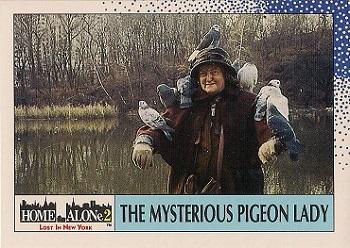
In the other direction, there’s a path leading down to some parkland. Sunbathers rest on grassy hills, and I can see dog and their owners meandering below. Getting close to Akerselva, I note how shallow it is. I think fair to suggest that this is the end-product of vigorous industrialization. This is Oslo’s Don River – the heart of early industry in the city. Like the Don, it has taken a beating over the years, and only recently has there been real attention put toward its value. This article by the City of Oslo tells me of the rejuvenation of the Akers. After years of pollution, a beautifying initiative has sprung up to make the river and the surrounding infrastructure a gorgeous hub for new ecosystems and human activity. Further up I can see a group of people standing in the middle of the ankle-deep waters. It reminds me of parts of the Mimico Creek in Etobicoke. I pass a bridge and a man convening with some pigeons (not quite at a Home Alone II level, though).
Then, I gladly come across a complex of brick buildings, unmistakably industrial in design. The one nearest to me has what I interpret to be a historical plaque (the old years hint toward it). I think about getting a dog-walker to translate for me, but I settle for Google’s help after the fact.
Akers Mek. Workshop. Founded here in 1841. Delivered equipment and services to businesses along the Aker River. Moved in 1854 to the islet in the bay. Was the city’s biggest shipyard pioneer in oil industry. Closed in 1982
I pass another bridge – this one with charming love locks (not quite Paris worthy, though). Up the Akers is a waterfall, one of a few along the river’s course. I head back to the buildings and ascend the stairs. At the top, I find out their adapted purpose (a fine arts school campus) and then a little further down along the cobblestone path a clue on their historic use. Christiana Seildugsfabrik. Christiana was Oslo’s name between 1624 and 1924. Fabrik might refer to clothes. After some research, I’m partially right. Seildugsfabrik was a hefty operation which made textiles for ships. Our friend Thorvald Meyer even had a hand in it.
Known as Khio, for short
Is This It?The collection of buildings under this former entreprise give it a Distillery District feel. Especially with the brick flooring between them.
I find my way to the road network at Seilduksgata. I arbitrarily turn north on the next street I come across (someone’s had fun with the street sign). Walking a bit, to my right I see the back of a church tower. To my left is a school, rich in great masonry and the use of arches.
Erm…
Heading up to and across Sannergata, there’s a different vibe to the district than what I experienced near Olaf Ryes plass. For one thing, the streets are for the most part barren. But the most striking characteristic is the prevailing graffiti. Grünerløkka might be a renewed working class district, but elements of its seedy past still linger on. It reminds me a bit of Toronto’s Leslieville, a neighbourhood in transition. Even with gentrification, hints of the days of yore remain. Travelling south on Toftes gate, a tattoo parlour and an animated mural.
Former factory(?) in the distance at Sannergata
Then I come to Birkelunden, the third park of the day. Grünerløkka is coloured with them. Birkelunden has its own tint. I enter from the side that houses the formidable looking Grünerløkka skole. My sights move across the park to get my second look at Paulus Kirke today, this time from the front. The creation and planning of public parks is a fascinating topic. It looks like Birkelunden was always intended to be a park from the start, but I wonder about the planning that goes into the surrounding environment. More specifically, I wonder if it was deliberate to pit a school and church across from each other with a park in the middle, but something about it works. There’s a religious institution, an educational institution, and then this public forum at the centre.
Then, I unexpectedly come across a market. This is the park’s Sunday bric-a-brac. I meander around the tables, looking for anything eye-catching and useless. I take the time to look for a wallet, but see nothing that suits me. I do come across CDs and used vinyl, though. I find a copy of Queen’s ‘A Day at the Races’. With my takeaway for the day, I exit via the familiar Seilduksgata. I take a moment to examine what looks like an upcoming development. Even the signs and gate are littered with spray paint.
Heading south, I come across Sofienbergparken – park #4 of the day. It’s the biggest of them all thus far. I spoke about the planning of parks earlier. Well, this one has an interesting story – turns out it was once a cemetery. Following a cholera outbreak in the city in 1853, the block that contained Sofienberg, then outside Oslo’s borders, was chosen as a resting place for the victims. Over time it seems people opined it was a bad and unhygienic idea to have a cemetery in the middle of a growing, dense neighbourhood, so it was gradually made into a park.
There’s a Toronto connection, too! St. James Park was also once a graveyard. In 1844, the overcrowded cemetery was moved to its present location on Parliament Street. But before that, Toronto suffered cholera epidemics in 1832 and again in 1834. The story is a portion of St. James Cathedral still holds the unmarked graves of cholera victims. More than that, there was idea that a cemetery in the centre of town (metres away from the financial core no less) was not the best scenario.
Grünerløkka, 1917. Source: Wikimedia
Oblivious to this bit of hidden history, I join the masses in reading and relaxing on the grass. I pull out some Toronto fiction, the classic In The Skin of a Lion, which I keep with me to remind me of home, and then I move on.
I admittedly get lost after this. I’m trying to find my way back to Olaf Ryes plass. Just when I think I’ve found it, I realise it’s not the right place. This is Schous Plass and, in addition to being park #5, has a nice old library. I have to consult a map, which shamefully tells me I’m actually not to far from where I need to go.
A short walk up Thorvald Meyers and I find the park! Before jumping on the tram, I make the executive decision to grab some lunch. I pass by a number of establishments including a famed watering hole in the area, Grünerløkka Brygghus (Brewhouse), and Valouria Vintage (because vintage shops are a must in hipster neighbourhoods – just as Queen Street West) before settling on a sandwich from Something Hotel. It’s an investment I immediately regret for its taste and price point, but it’ll have to do. I eat while I wait for the tram that got me here. I have just as many minutes wait as the number trikk I need. When it does come, it swoops me back to Majorstuen.
This marked the end of my venture on this particular day, but I would return with company to Grünerløkka two more times in the coming days. We would head to the western part of the district on the other side of the Akers. Here one finds the grand Mathallen Food Hall (which was sadly closed when we tried to go) and little alleyways that lead to riverside entreprises. Ingens Gate (which comically translates to Nobody’s Street) in particular is a fun little nook with entertaining street art.
On another occasion, we fuel up at the two microbreweries: the already mentioned Brygghus, and at Schouskjelleren Mikrobryggeria, which is just south of Schous plass. It’s a dimly lit basement bar (really, ‘kjelleren’ means ‘basement’). No music, no trinkets on the wall, no nothing. There is a a sweet fireplace, though! And it’s fittingly located on the grounds of the former Schous Bryggeri (brewery). Christian Schou, a brewer, is another name synonymous with the local history of Grünerløkka that lives on in the neighbourhood.
Actually, the growth of amazing drinking establishments that has (in part) made Grünerløkka the “to go and be” district in Oslo might be attributed to the growth of the craft beer industry in Norway. The beer industry as a whole has been re-animated because of microbrews. It’s interesting because there have been breweries in Oslo for a long time (look at the above 1917 map and look for anything with Bryggeri in the title – I can count 3 of them), but the industry went stagnant. With Oslo and Norway playing catchup, the bar scene in the city – something that Toronto has been doing very well at in recent years – is better than ever.
I’d say that’s a good reason to say “Skål” to Grünerløkka.
North York Centre. Lansing. Uptown. The House that Mel Built. What was intended as a simple errand at Yonge and Sheppard turned into a tour of this downtown away from downtown.
It’s been a few years since I frequented the area on a semi-regular basis, so I was slightly shocked at the amount of growth since I was last here. At Yonge and Sheppard – the fortuitous cross-section between two subway lines – towers in differing stages of development have displaced the Metro-flanked strip mall.
Walking up the street, I can see even more cranes with upcoming condos in the distance. Below them, big box stores and restaurants line the streets. My destination is Gibson House Museum – one of the few historic sites operated by the City of Toronto that I have not visited. The towers I saw earlier surround the museum and tell me that a certain Gibson Square is coming to the corner of Yonge and Park Home. I’m compelled to do me a little look around of the museum to see the extent of the ‘takeover’. From Park Home I can see the hint of the brick building beyond the construction site. I continue to Beecroft, where I pass a parkette . I would examine it better after my museum visit. I notice a a house across the street which I immediate recognize as being of an earlier architectural style. I snap a photo and make a note to ask the Gibson House staff about it.
Moving around Gibson House via Basil Hill Court, I’m struck by the contrast of the back of the house and the condominiums going up in front of it. I circle to the front of the house where I’m greeted by a familiar blue plaque. This marker was erected by the Ontario Heritage Trust (interestingly known as the Archaeological and Historic Sites Board in the text) to commemorate David Gibson. I take a few steps back to admire the entirety of the house – but am stopped by the construction wall behind me. Finally, I go around to the side where the entrance is a modern addition to the back the house.
I’m greeted at the desk by a nice administrator and I immediately mention my observations while getting to the museum. She concurs that it’s tough situation being “landlocked by condos.” It has affected their foot traffic. I pay my 6.29 for an adult visit, she takes my bag to store while I take the guided tour, and I wait for a costumed interpreter in the Discovery Gallery, reading up on textiles and the Gibson story.
This was not the first home the Gibsons owned on this property. A wood frame house stood here, but after the rebellion of 1837, Gibson – a traitor – fled to the United States and the house was burned. Was he returned in 1850, he built this grand Georgian house.
We start in the living room where Claire tells me about Mr. Gibson and the room we are in. He was a land surveyor, which caused him to be often away doing work . This allowed the family the ability to be financially stable enough – not rich, not poor. Of the room itself, Claire tells how the idea was to give off that the impressions they were well off – “perception becomes reality” at work. It sounds like a pompous attitude to have, but it’s a dynamic I have seen in my own life in the 21st century, so perhaps it’s become somewhat normalized. The room is seperated by doors, which divide the room into an entertaining space for guests and an area where the children could play. The public/private divide comes up again later in my tour.
The room is decked out in Christmas decor, although a tree would have been anachronistic for the time. Christmas as a whole was not a big deal; perhaps a meal was had and that was it. Hogmanay was the big holiday celebration. Although, if there were adult drinks involved, at least Eliza Gibson was not involved in them, as she was temperate (I think?).
We go to the upper level where Claire tells me about the hired hand David Gibson employed to run the farm (because Gibson was often away). His room was sizable enough for a comfortable enough living, and was situated far away from the children’s bedrooms (locked as well). Claire says there is speculation about his relationship to the family – whether it was strictly an employer-employee dynamic or the family and their good friend. His room faces westward and allowed him a view of the property he managed. The Gibson farm extended all the way to Bathurst from Yonge but wasn’t very wide. He could look out and see all flat fields. Today, the view presents a challenge in interpreting the site because as Claire mentions one sees “a lovely building” when one looks out today.
The children’s bedroom – consisting of a boys and a girls – are low-key in their appearance. And this was on purpose. Nobody went into the bedrooms save for the children themselves and that was in the morning and at night. All the bells and whistles, with the notable exception of the master and guest bedrooms, were reserved for the public areas of the house. The idea, as Claire presented it, was to create a facade for guests: impressing them into thinking they were better off than reality.
As mentioned before, the Gibsons weren’t poor, but they weren’t the elite of the elite. They owned this great house that, if not for the lack of indoor plumbing, might suit a family today. These facts prompt to ask myself – and Claire – “If the Gibsons were nothing special, why does the family’s story survive, as opposed to other comparable households in the area?” The answer includes a couple of factors working together. First, because of his line of work, David Gibson wrote a lot of things down that inform us about the family and their lives. Unfortunately Gibson House records do not include records from the other occupants (Claire says it is not even known if Eliza Gibson was literate), but his paper trail is sizable enough. Second, it helps that the house itself survived. Being brick, it did not burn down like other residences. It also survived demolition even after the farm was broken up for development. During the Centennial celebrations of 1967, the Canadian government alloted money to restore historic houses and turn them into museums. The Dempsey Brothers Store/Joseph Shepard House that I saw on Beecroft might very well have been a museum, but the Gibson home instead was commemorated.
In addition to these rooms, there is a place for the seamstresses hired by the family, as well as a guest room (which is the nicest of the non-master bedroom rooms).
Downstairs, Claire takes me through the Gibson’s office, the kitchen, and dining room. The former is populated by the man’s surveying equipment (not original, of, course). In the kitchen, my guide takes me through the Gibson’s diet (a lot of potatoes) and says Eliza Gibson took care of the kitchen herself, no help. The focal point of the room is the fireplace. One can only imagine the difficulties in cooking an entire meal on it – and worrying about the real hazard of not catching fire. (Tidbit: museum workers and volunteers need safety training just for this reason). The nearby dining room is a showcase of how great the Gibson had it (or were believed to have it, anyways. It also houses two original artefacts: a clock and a cabinet.
Our tour ends where it began. Claire shows me a posted map where visitors have plotted their place of origins on a map. Also presented to me is a full family tree of the family. I heard about it upstairs, but I need to visualize it. Interesting fact: Eliza and David Gibson were related before they married. I forgot the exact connection, but perhaps it was 2nd cousins. My guide says they didn’t grow up together, so it might alright by today’s standards? I might agree with that.
I thank her and she leaves me to browse a little bit. After that I pay my appreciation to the staff and head my way. My adventure in understanding the area and the museum is not done, however. I head down to Gibson Park to see some public installations related to the Gibsons. You may read about that here.
After the park, I head back to Yonge. My final stop for the day will be Mel Lastman Square. This is the Nathan Phillips and Albert Campbell Squares of North York. The former civic heart of the borough and a cultural gathering place. Just to note a few events associated with it, it hosts skating, a farmer’s market, and Canada Day celebrations. Lastman himself was a former mayor of North York and the first mayor of the Mega-City. His fingerprints are all over the borough.
I have a look around, noting the North York Central Library, where I ventured to on a few occasions during university, and a gazebo of sorts. Satisfied, I head for the subway.
I get off the 100C Flemingdon Park bus at Broadview and Mortimer and cross the street. To the west, Mortimer becomes Pottery Road and is my route on the way to Todmorden Mills Heritage Site. A sign ushers me to the descent.
And quite the descent it is! There are several topographical kinks within the city, and this street is definitely one of them. I’m no cyclist myself, but I have to feel for the people coming up the hill. In fact, as I read more about it , Pottery Road ranks up there for people on bikes as the toughest to navigate. My pity pretty soon turn inwards, because I realise that I’ll probably have to muster the climb on the return trip. D’oh.
Another sign and a bricked path ushers me into the Todmorden Mills grounds. Located in the Don River Valley, it’s a site that claims both industrial and natural heritage. In 1967, it was re-adapted as a historic site and operates today under the City of Toronto Museums to help tell the story of Toronto. I was here once before, although very briefly to help out to an event. Today is a long overdue chance to do some more exploring of the museum and the great Wildflower Preserve I’ve heard so much about. (Although, ironically enough, I still don’t have an adequate amount of time to do a just visit). I also read about an intriguing photo exhibition in the Papermill Theatre, which is my first stop.
On the way toward the building, I have to look up to the smokestack, which was nominated for a 2013 Heritage Toronto Award for its recent restoration. Anyone who has ridden down the Don Valley Parkway has seen the chimney and its giant lettering.
Inside the Papermill Theatre is an art show entitled ‘The Past is Never Far.’ It features the work of three people who have visually captured the city at various points in its history: Elizabeth Simcoe, who painted some of the first images of Toronto, William James, who took 6000 some odd photos of the city which are all digitized in the Toronto Archives, and Summer Leigh. If the last name doesn’t ring a bell, it’s because she’s the artist behind the show.
Summer takes the images of her predecessors and photographs their subjects in their modern locations. So we can find James’ photo of the dirty foot of Yonge Street in 1909 mixed in with her take of the same site the 21st century. Or Lady Simcoe’s view of Toronto harbour in 1793 with the current incarnation of the shore as we see it today. It all makes for a great visual look into Toronto’s past and present.
Taken together, the exhibition tells a great story. Its message comes in the title, and is something I have been saying and thinking for a while now: Toronto is a layered city. Some of its (her?) landforms and landmarks have changed a great deal. Some haven’t. Perhaps some of the changes aren’t immediately apparent to us, but they are there nonetheless. The past isn’t far. You just have to dig for it, do some analysis, maybe even put on a photo exhibition.
That said however, perhaps some things do stay the same. Summer has one image up of William James that features the Don River Valley flooded in 1910. 100 years and a parkway later and we’re still facing the wrath of the overflowing Don. I shake my head and smile at that. Plus ca change, plus c’est la meme chose, n’est-ce pas?
As a nice and unexpected treat, the artist herself is on hand, and I am able to pick her brain about what I see – whether she was actually at the disputed location of the Simcoes’ Castle Frank residence, as an example. Among the random things we talk about are old school horse drawn streetcars and being de facto tour guides for people in our lives. Through that chat it quickly becomes clear that she is a true buff in Toronto history, whose knowledge, talent, and vision really shows in her work. We probably can geek back and forth about the city for another good chunk of time, but alas, time isn’t abundant today and I graciously thank her again and make my exit.
I head up to the brick path and continue down it. To my left, I see a familiar blue marker. The Ontario Heritage Trust sign gives my the need-to-know of Todmorden’s history. I briefly circle around the exteriors of the buildings. I did some reading prior to coming, and, if I had more more time, I would enjoy a tour, but it will have to wait until next time.
Also happening on the grounds of the museum is Eco-Art-Fest, an arts, heritage, culture festival put on by No. 9, who I first heard about during Jane’s Walk preparations. There is a designated ‘chilling’ area which has some pretty soothing country tunes going, an elevated platform (I think it’s also a stage) with an oven, picnic benches, and craft table where a few children try their hands at water colour painting (shoutout to Elizabeth Simcoe with that activity).
I continue on the brick path once again, heading toward the bridge. I see a few joggers around, and I have to admit that it that this would be a very good place for a run. I would run through here if I loved closer. A few feet before the bridge is a swirly blue line with the words ‘Don Was Here’ in bold lettering. No, some guy named Donald hasn’t marked his presence. It’s actually a public art initiative commissioned by No. 9 and curated by Labspace Studio in partnership with the Toronto Region Conservation Authority. There are several of these ‘Don Was Here’ markers from Todmorden Mills to the mouth of the river which shows the meandering route of the Don before it was rerouted and straightened. It’s a pretty amazing tribute to the city’s natural heritage. The project has got an interactive site too…with a map!
I notice some letter on the side of the bridge as I cross it, but may little mind to it (more on this later). Instead, I focus on the green area it overlooks. I walk around (passing another ‘Don Was Here’ marker) and inspect it a little better. Beyond that it looks really beautiful, I can’t pick out any species or just the entire ecological significance of it.
I circle around and head back to the open area with the benches so I can give the Wildflower Preserve a walkthrough. I am greeted by a pair of signs to explain everything. It turns out the area under the bridge was the last area on the trail. I get the signs on my phone because I know I’ll need them. And hey, now I know what an Oxbow is.
I spend a few minutes at the pond to take in everything. Gazing out and down at the green surface, I am hoping to spot something alive. Instead, I just see a pop can half-submerged in algae and just think somebody has really missed the point. I do catch movement, something skipping across the water. I can’t tell if it’s a fish or a frog, but I take it anyways and move on.
The tree canopies are tall enough to make me feel closed in and away from everything, but even with the rustling wind, buzzing insects, chirping birds, I still can hear highway traffic. It’s a weird thing spot to be in. I feel like I’m in a secluded spot, but really, I am not. Actually, it reminds me of wandering the Betty Sutherland Trail near the 401. A city within a park, indeed.
At one point, my curiosity is piqued when I spot what looks houses floating in the oxbow. I have to maneuver through and over things to get to the water’s edge. Yup, they are floating houses. Either some trekkers got really mischievous and creative or this is something deliberate and tied to the museum. I suspect the latter. I do some research after the fact, and the Ec0-Art-Fest website and its scrolling banner images provide the answer. The houses are an installation for the festival – as is the lettering on the bridge (which read from the other side says ‘Like a Bridge’) and the ‘Don Was Here’ project. Eureka!
As I walk the paths, I try to see if I recognize any flora. I think the yellow flowers are goldenrod, but I’m not willing to bet my guitar on it. In co-creating a nature walking tour last summer, I was introduced into identifying certain floral species, but it does not help me out here. Instead, I just go back to marveling at the Preserve in a big picture sense.
I remember something Summer said about our former industrial centres. Places like Todmorden, the neighbouring Evergreen Brickworks, and the quarries of Greenwood and Smythe Parks were pretty dirty looking once upon a time. To see their conversion into beautiful natural and park lands is just remarkable. Tormorden and the Brickworks in particular have their own ecosystems, which makes this preserve more amazing to be in and think about.
For a while I try to go off the main path onto offshoot routes, but then I realise that I really have no idea where they would end up. And I’m being stupid with time. So I turn back and get to the end of the wooded area. I’m at the back of the parking lot, and instead of walking through it, I turn around and tour the Preserve again. When I reach the beginning, I spot a warning I missed the first go around. I smile at the mention of the ‘East York’. The borough lives on.
Walking back to Pottery, I give the museum one last look and then head off to do the climb. Part of me wants to visit the Brickworks, but I know this is not doable. I convince myself it would be a real beneficial exercise to power through at a quick pace, but halfway I’m a bit gassed and cursing my idea. Fortuitously, I do break beside a Sumac, though! Happy that I recognize something, I leisurely finish the ascend and then make it back to The Danforth.
It’s fun to think about what was happening in different parts of the city at the same time. You have communities with no formal connections to each other growing alongside each other. Communities that eventually form the modern City of Toronto.
Wikipedia’s page on the History of Toronto has articles on History of Neighbourhoods, Historic places, Oldest buildings and structures, and Timeline of Toronto History. It would interesting to combine these into a giant timeline of events in Toronto’s history. More than that, because this relies on displaying information tied to places, I’d like to see the information displayed on a map (because really, who doesn’t like looking at maps?). I imagine being able to look at map of a given year and clicking on different nodes placed on that map. Then, being able to explore the map from the following year.
I imagine being able to draw observations about how the city developed, what was settled when, what areas were industrializing/de-industrializing, when and how natural landforms were shaped (think the burial of creeks) etc..
In all, it would be another way to capture the story of Toronto. Just an idea.
Edmund Wyly Grier’s “A View of York (Toronto) Upper Canada, 1820” Credit: Toronto Public Library